



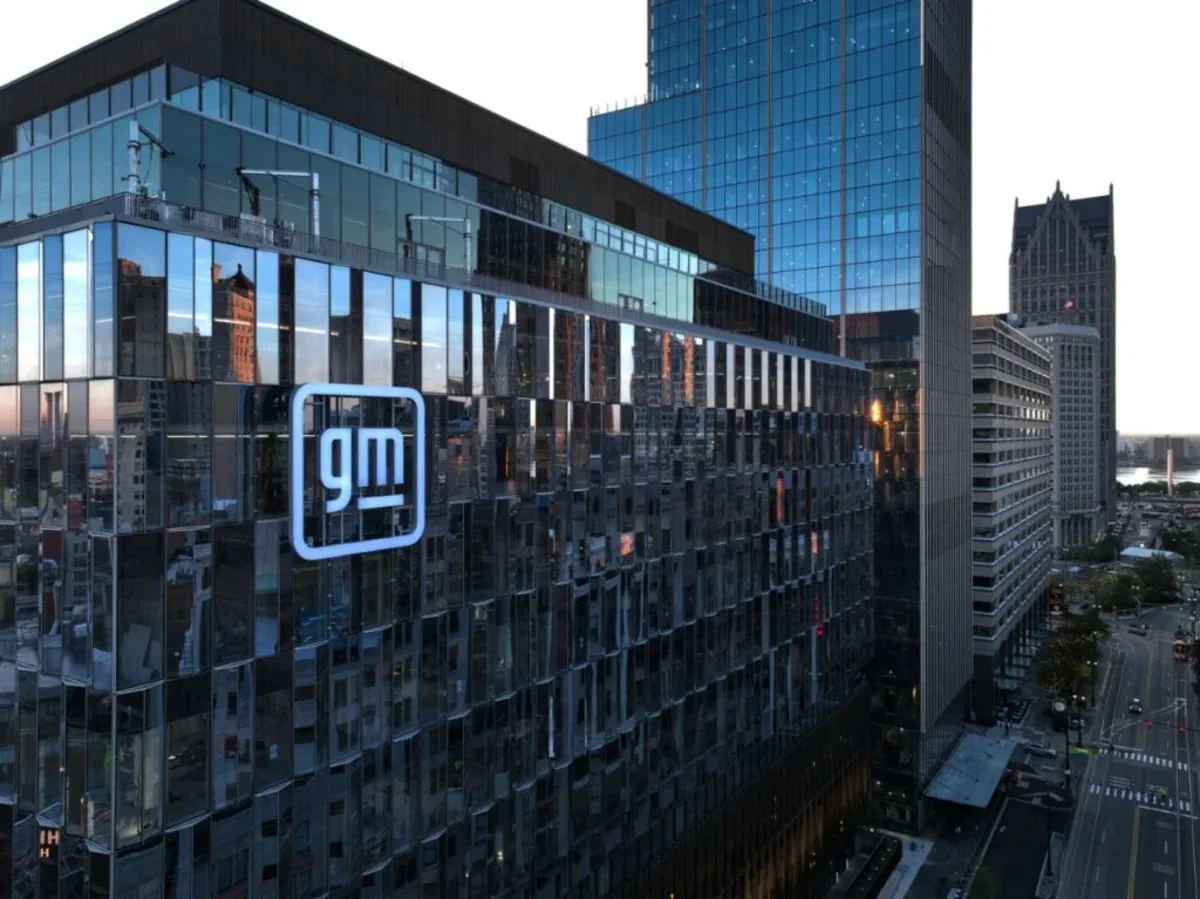
DETROIT, MI — A building long associated with General Motors’ era of industrial dominance may soon take on a new role in Detroit’s changing economy. Henry Ford Health is considering buying Cadillac Place, the former GM headquarters, as it prepares to open a $2.2 billion, 20-story hospital nearby.
The possible move would place a major hospital system inside one of the city’s most recognizable corporate landmarks. It also reflects a larger shift in Michigan, where health care construction is growing quickly and reshaping both the skyline and the job market.
Henry Ford Health weighs a headquarters move into Cadillac Place
Cadillac Place is the 1.4 million-square-foot building that once housed GM’s top executives on its famous 14th floor. The state of Michigan owns the property now, after General Motors left the building and moved to the Renaissance Center years ago.
Henry Ford Health is building a new hospital down the street and is now looking at Cadillac Place as a possible headquarters site. The development was first reported by Crain’s Detroit Business, and it would be another sign that the city’s strongest growth is coming from health care rather than auto manufacturing.
GM itself has also been on the move. Earlier this year, the company left the Renaissance Center and shifted its headquarters to Dan Gilbert’s Hudson’s Detroit building, part of a broader corporate reshuffling in downtown Detroit.
Billions in hospital projects are spreading across Michigan
Henry Ford Health is far from alone. Across the state, hospital systems are investing heavily in new inpatient and outpatient facilities, creating a construction wave that is easy to see in city centers and suburban corridors alike.
The University of Michigan has recently set aside more than $1.4 billion for hospitals and outpatient centers in Ann Arbor, Lansing and Troy. One of those projects is a $360 million specialty care center being built on the former Kmart headquarters site in Troy.
Corewell Health plans to spend hundreds of millions of dollars on new inpatient towers at Butterworth Hospital in Grand Rapids and at Beaumont Hospital in Troy. In Traverse City, Munson Healthcare is building a free-standing 24-bed neonatal intensive care unit at Munson Medical Center as part of a $40 million investment in women’s and children’s services.
Hospital hiring now rivals the scale of major industries
The building boom is also driving a major hiring surge. A new Michigan Health & Hospital Association report says hospitals in the state hired 58,000 workers last year and are trying to add 23,000 more.
The association also says Michigan health care payrolls reached $51.4 billion last year. That is more than two and a half times the $19.4 billion that state automakers paid in wages, a comparison that underscores how large the industry has become.
For many communities, that means health care is now a core economic engine. The jobs are not only in patient care but also in construction, operations and the support services that keep large medical systems running.
Why hospitals are spending so much on new space
Industry leaders say the growth reflects changes in how care is delivered. Procedures that once kept patients in hospitals for days, such as joint replacements, are now often handled in outpatient surgical centers.
Hospitals are also building larger patient rooms and updating facilities to accommodate new technology and improve safety for workers. Rex Burgdorfer, who has advised Michigan hospitals in merger talks, said systems are also catching up on capital spending after the Covid era.
At the same time, he said rural hospitals are struggling with lower patient volumes and reduced revenue. That leaves some smaller facilities in a much more difficult position than the large systems expanding in metro areas.
Critics warn higher spending may not mean better value
Not everyone sees the construction surge as a clear win. Bret Jackson, president and CEO of the Economic for Michigan, argues hospitals are not really competing on price or quality in the current market.
Instead, he says, they are trying to gain market share while employers, workers and insurers in other industries absorb the costs. He pointed to a Livonia intersection where three major systems have ambulatory care centers as one example of overlap and duplication.
Jackson said the Economic Alliance, which was founded in 1982 as a coalition of corporations and labor unions, has become focused almost entirely on health care costs. He argues that rising medical expenses are one of the biggest concerns for employers and households alike.
An aging population could push demand even higher
Michigan’s long-term outlook suggests the pressure on health care may continue. State population estimates show that by 2035, the state is expected to have nearly 400,000 more residents age 65 and older.
That demographic shift points to rising demand for medical services, from joint replacements to other procedures tied to older age. Burgdorfer said hospitals are largely price takers in the managed care system, which helps shape what they can charge.
For Michigan, the challenge may be balancing the need for more care with the need to control costs. The state’s economy once revolved around autos, but today the growth story increasingly belongs to hospitals, clinics and the people who work in them.