



DETROIT, MI — Michigan’s need for registered nurses is expected to remain strong for years, creating an opening for Detroit-area students and working nurses who want to enter the field or move ahead in it. State and national projections point to a shortage driven by retirements, workers leaving the profession and people moving into other jobs.
That reality has put a spotlight on nursing education that is easier to access for people at different points in their careers. Lisa Wagner, regional nursing director for the Michael O. Leavitt School of Health at Western Governors University, said expanding access to quality nursing education is one of the most effective ways to respond to workforce shortages.
State projections point to thousands of openings each year
The Michigan Center for Data and Analytics projects about 5,950 openings for registered nurses in the state each year through 2032. Nationally, the U.S. Bureau of Labor Statistics projects roughly 189,100 registered-nurse openings annually from 2024 to 2034.
Those numbers reflect more than growth alone. They also account for a workforce that is changing as experienced nurses retire, leave the profession or shift into other occupations. For local families, that means nursing remains a field with steady demand and long-term relevance.
In practical terms, the projections raise two questions: who will care for more patients, and how can more people get the training needed to step into those roles? Schools and employers alike are being pushed to think about access, speed and flexibility.
Different nurses need different educational routes
Wagner said there is no single path that fits every aspiring or practicing nurse. New students need programs that prepare them for licensure and patient care, while licensed nurses may be looking for credentials that help them move into leadership, education or advanced practice.
Western Governors University says its Leavitt School of Health offers more than 20 health and nursing degree programs. The list includes a prelicensure Bachelor of Science in Nursing, an RN-to-BSN pathway for licensed nurses, and Master of Science in Nursing options focused on leadership and education.
The university also offers advanced practice pathways such as Family Nurse Practitioner and Psychiatric Mental Health Nurse Practitioner programs. That range is meant to serve people entering nursing for the first time as well as those who already work in healthcare and want to keep building.
Michigan students can combine online classes with local clinical work
WGU says eligible Michigan students can enroll in its prelicensure BSN program, which is built around online coursework paired with in-person clinical rotations. The university says its Detroit-area clinical locations are part of that model, and rotations are generally assigned within about 60 miles of the designated area.
That local structure matters for students who need to stay connected to their communities while training. Program eligibility, clinical placement details and licensure rules can vary, so the university says prospective students should review the latest requirements based on where they live and what kind of nursing career they want.
For many students, the mix of online and hands-on learning can make nursing school feel more manageable without reducing the real-world experience needed to care for patients safely.
A flexible model is aimed at working adults
Returning to school can be especially hard for nurses already balancing shifts, family responsibilities and other obligations. Wagner said WGU’s competency-based model allows students to move ahead by showing mastery of skills and knowledge rather than only by spending time in class.
That approach can be especially helpful for experienced professionals who already know some of the material and need a format that fits around work and family life. It also gives students more room to progress at their own pace when they are ready to do so.
Online learning alone is not enough for nursing, though. Hands-on practice remains a required part of preparing for clinical work, which is why the university combines its flexible course model with simulation and in-person rotations.
Simulation and clinical rotations help students build confidence
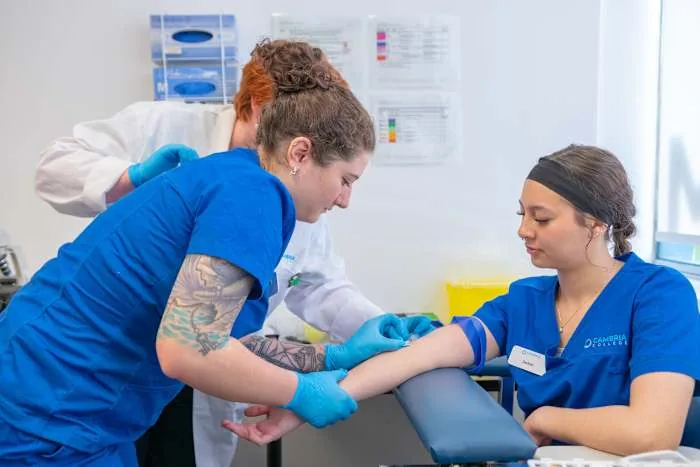
Prelicensure nursing students must learn how to evaluate patients, communicate with healthcare teams and respond when a patient’s condition changes. WGU says simulation training and clinical rotations give students a place to practice those skills before they are responsible for real patients.
Students complete in-person clinical work locally and also take part in simulation experiences at an assigned WGU Clinical Learning and Simulation Center. The learning labs are designed to recreate patient-care settings where students can work through scenarios and then talk them through with instructors.
Wagner said simulation-based training has become increasingly important because it helps students develop clinical judgment, teamwork, communication and patient-care skills in a safe, controlled environment. The goal is to prepare future nurses without skipping the hands-on practice the job requires.
More education can open doors beyond bedside care
For licensed nurses, additional education can lead to new roles outside direct bedside care. Depending on the degree earned and the licensing requirements that apply, nurses may move toward management, teaching, advanced practice or specialized care.
Wagner said continued learning can also strengthen skills that matter across the healthcare system, including evidence-based practice, interdisciplinary collaboration, patient-centered care and leadership. Those abilities are increasingly important as healthcare settings grow more complex.
She said meeting the nursing shortage will take more than enrolling more students. Future nurses also need to be ready for an evolving environment that calls for clinical expertise, adaptability and leadership. For Detroit-area residents, that makes the right nursing program an important first step.