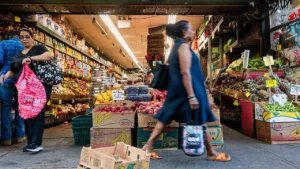

NEW YORK, NY — Thousands are expected to line Eastern Parkway for Monday’s West Indian Day Parade, where steel drums, colorful floats and the aroma of Caribbean food will again fill one of Brooklyn’s best-known streets. For many in New York’s Haitian community, the celebration arrives during a period of added uncertainty, making the parade feel especially important.
Organizers say this year’s event carries a stronger sense of pride and determination than in recent years. Haitian participants describe the parade as a place to celebrate culture, lift one another up and show a visible presence in a city where the community remains deeply rooted.
The parade is among the largest Caribbean cultural celebrations in the United States, and Haitian groups are again using it as a showcase for music, dance, art and heritage. Even with concern hanging over immigrant families, organizers say they are not stepping back from public celebration.
Haitian organizers say the parade feels like a public statement of belonging
For Haitian organizers, the parade is about more than festivity. It is a chance to affirm identity at a time when some community members feel pressure from federal immigration enforcement and uncertainty around temporary protected status.
Patricia Lafontant, a Brooklyn native who runs the community group Despriy Ayi, said the mood this year reflects both pride and anxiety. She described the parade as a bright spot in a difficult period for people who are trying to keep working, support families and remain visible in public life.
She said Haitian culture has long relied on resilience. That spirit, she added, is part of why the parade matters so much now: it offers a space where people can gather, celebrate and remember that they are not alone.
Temporary protected status and court rulings shape the backdrop
The parade takes place against a changing immigration backdrop for Haitians in the United States. Temporary protected status, known as TPS, has allowed hundreds of thousands of Haitians to remain legally in the country, but that protection has been at the center of legal and administrative uncertainty.
A federal judge finalized an order in early August clearing the way for roughly 350,000 Haitians to lose TPS protection. That development followed months of concern among families and advocates, many of whom have tried to understand what the changes could mean for work, housing and daily stability.
Organizers say that uncertainty has only sharpened the emotional meaning of Monday’s celebration. Rather than retreat, they are encouraging people to participate, showing cultural pride in a moment when many feel vulnerable.
A community built over decades in New York City
Haitian New Yorkers are not new to the city’s cultural landscape. The community is estimated at about 160,000 in the New York metropolitan area, according to the Migration Policy Institute, and many families are concentrated in Brooklyn neighborhoods such as Flatbush, East Flatbush and Crown Heights.
That long history goes back decades. Many Haitian migrants arrived in New York in the 1960s and 1970s, often fleeing the rule of Jean-Claude “Baby Doc” Duvalier and the repression and economic collapse that pushed many people to leave the island after his ouster in 1986.
For later generations, the parade has become one more way to preserve ties to language, food, music and dance. Organizers say those traditions remain strong even as younger Haitian Americans continue to define what the community looks like today.
Music, flags and fashion help tell the story of Haitian identity
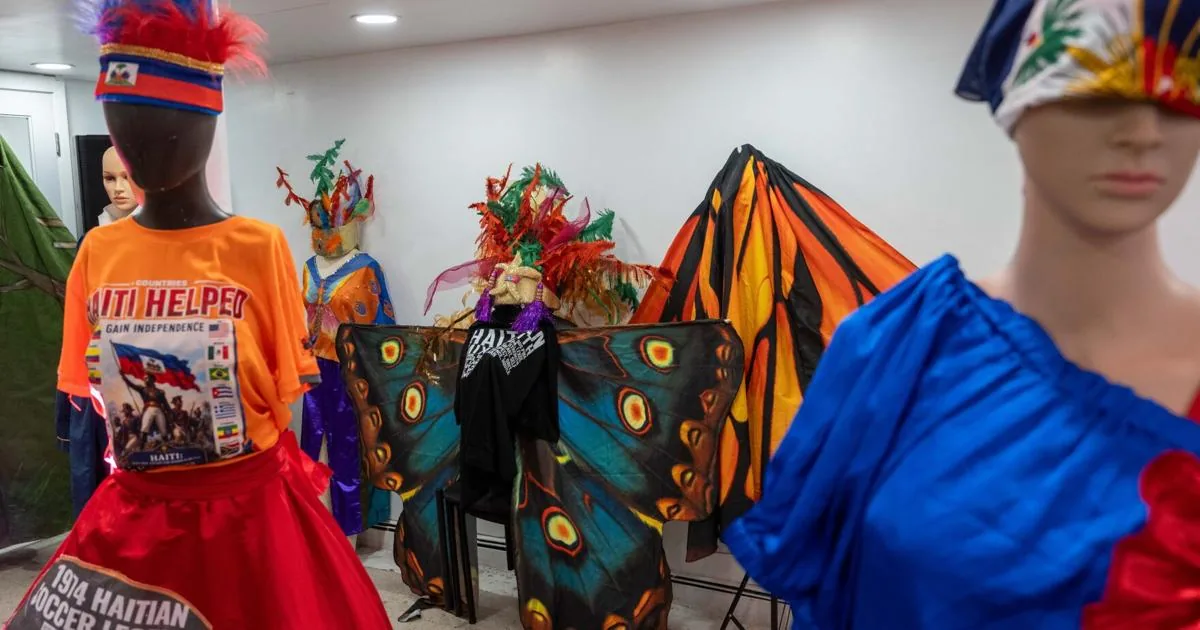
This year’s parade lineup includes about 160 artists, designers, musicians and residents, with organizers putting special emphasis on Haitian creativity. Community participants have spent the weeks before the parade making costumes, hand-painting designs and preparing visual tributes to the country’s culture.
Among the symbols expected to appear are miniatures of Haitian flags and skirts inspired by well-known national images. The parade also features the “Freedom” tee, an orange shirt linked to Haitian revolutionary leaders and the broader story of resistance.
Fashion is part of that expression as well. Design student and organizer Clara Poteau said the event gives Haitian Americans a chance to combine style, pride and history in one public setting. For many participants, the look of the parade is inseparable from the sound of the music and the message behind it.
A younger generation is helping carry Haitian culture forward
Organizers say the parade’s future depends on younger Haitians staying connected to the traditions that shaped their families. The event is designed not only as a celebration, but also as a way to keep language, dance and music alive for the next generation.
Jesua Jou, a leader with the Brooklyn-based group SPJ, said the parade’s energy reaches beyond entertainment. He pointed to music as the emotional center of the day, arguing that it helps people feel seen and connected to one another across generations.
That message is also reflected in the lineup for the parade’s first energy stage, which will include a mix of performers and creators. Organizers hope the mix of art, fashion and sound will remind attendees that Haitian culture is not only surviving but evolving in New York.
The parade continues as a symbol of joy in a difficult season
Despite the anxiety surrounding immigration policy, Haitian organizers say they do not see public celebration as a distraction from serious challenges. Instead, they view it as a form of strength — a way to support people emotionally while also reinforcing community ties.
For many families, the parade offers a rare chance to gather without fear and to celebrate a heritage that spans generations and geographies. Organizers say that in a time of uncertainty, that shared joy matters as much as any formal political or legal outcome.
The result is a parade that remains rooted in music and spectacle, but also in endurance. In Brooklyn, Haitian organizers say the day will be a reminder that culture can be both festive and steadfast, even when circumstances outside the celebration feel unsettled.