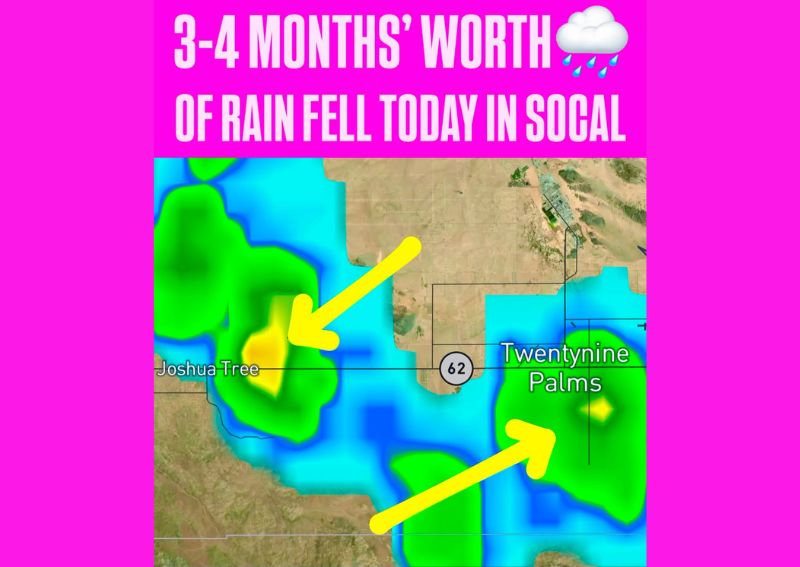
JOSHUA TREE, CA — Heavy rain fell across the high desert communities of Twentynine Palms and Joshua Tree, California, this afternoon, with some areas receiving between 1 and 1.5 inches of rainfall in just a matter of hours, an amount roughly equivalent to 3 to 4 months worth of typical precipitation for this arid region of Southern California.
Rain Totals Reach Remarkable Levels for the Desert
Rainfall totals reaching 1 to 1.5 inches may not sound extraordinary in many parts of the country, but for the desert communities surrounding Joshua Tree and Twentynine Palms, this amount represents a truly significant precipitation event. Given the region’s typically sparse average annual rainfall, a single afternoon’s worth of rain equating to several months of normal precipitation underscores just how intense and unusual this particular rain event proved to be for the high desert.
This kind of concentrated rainfall in an arid environment can have outsized effects compared to the same amount falling in a wetter climate, since desert soils and drainage systems are generally not designed to handle rapid, heavy precipitation over a short period.
East Joshua Tree and South Twentynine Palms Hit Hardest
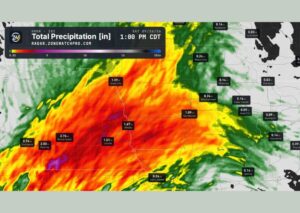
Radar-estimated rainfall data highlights two specific areas that received the heaviest totals during this afternoon’s rain event: east Joshua Tree and the area south of Twentynine Palms. Both locations are shown on rainfall graphics with the most intense yellow and orange shading, indicating the highest estimated precipitation totals within the broader area of rainfall that moved across the region during the afternoon hours.
The concentrated nature of the heaviest rainfall in these two specific pockets suggests localized storm cells or enhanced rainfall rates within those particular areas, even as lighter rain fell across the broader surrounding desert landscape near Highway 62.
A Rare Weather Event for the High Desert
Rainfall events of this magnitude are relatively uncommon in the high desert region surrounding Joshua Tree National Park and Twentynine Palms, an area that typically receives only a few inches of precipitation across an entire year. When a single afternoon delivers a rainfall total equivalent to several months of typical precipitation, it represents a genuinely notable meteorological event for local residents accustomed to the area’s characteristically dry climate.
This kind of concentrated, heavy rainfall in desert terrain can also carry an elevated risk of flash flooding, as the region’s typically hard-packed, poorly absorbent soil struggles to quickly absorb large volumes of water falling in a short timeframe.
Impacts Likely Felt Across the Local Landscape
Given the substantial rainfall totals recorded across east Joshua Tree and south Twentynine Palms, residents and visitors in the area should be aware of the potential for localized flooding, particularly in low-lying areas, washes, and other terrain features common throughout the high desert region. The National Park Service and local authorities typically monitor conditions closely following significant rain events of this nature, given the unique flash flood risks associated with heavy rainfall in desert environments where normal drainage patterns can be quickly overwhelmed.
For continuing coverage of severe weather events and critical storm analysis across the United States, visit diamondprowl.com.