ATLANTA, GA — The fall hummingbird migration is sweeping south across the eastern United States, with the main wave of ruby-throated hummingbirds expected to move through much of the Southeast over the next two weeks before ultimately reaching the Gulf Coast and Florida. Residents throughout the migration corridor are being encouraged to keep an eye on their flowers and feeders, as hungry hummingbirds fueling up for their long journey south may soon become noticeable visitors in backyards along the path.
A Staggered Migration Sweeping the Region
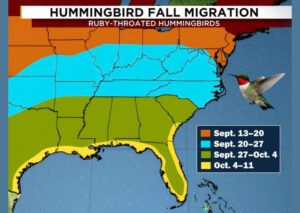
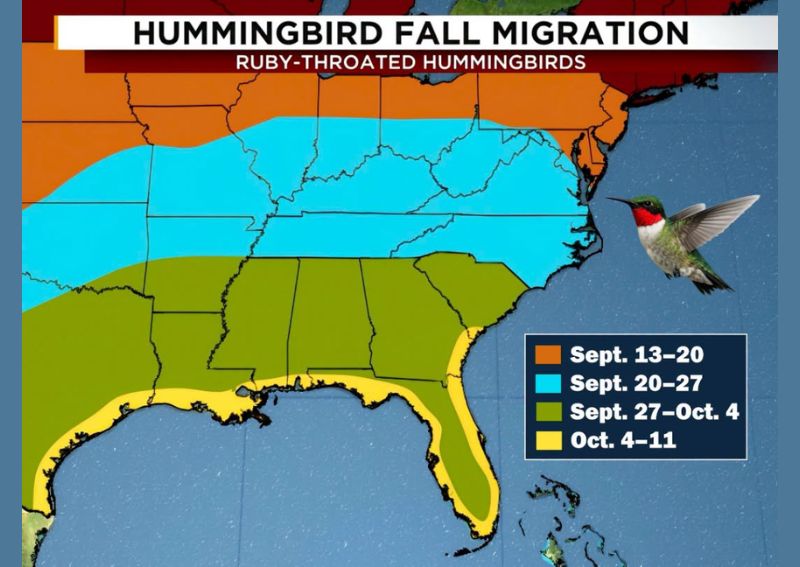
Migration tracking data shows the ruby-throated hummingbird migration moving through the eastern United States in a clearly staggered pattern, with different regions experiencing peak movement at different points over roughly a month-long window. The northernmost states along the migration path, including much of Tennessee, North Carolina, and Virginia, are seeing peak movement earliest, generally between September 13 and 20, as birds departing from breeding grounds farther north begin their journey south.
This kind of staggered timing across a broad geographic corridor is typical of songbird and hummingbird migrations, as the birds generally depart from northern breeding areas first and progressively move through more southern regions as the fall season advances.
Central Southeast Sees Peak Movement This Week
A broad band stretching across much of the central Southeast, including large portions of Alabama, Georgia, and the Carolinas, is currently experiencing the peak window for hummingbird movement, generally falling between September 20 and 27. This represents the main wave referenced in the migration outlook, with the greatest concentration of traveling ruby-throated hummingbirds expected to pass through this zone during the current stretch of days.
Residents throughout this central band should expect to see the highest likelihood of increased hummingbird activity at feeders and flowering plants during this specific window, as migrating birds seek out reliable food sources to fuel their continued journey southward.
Gulf Coast States See Migration Push Late September Into October
Moving further south, the migration wave is projected to reach much of the Gulf Coast region, including large portions of Mississippi, Louisiana, and inland Florida, between September 27 and October 4. This timing reflects the natural progression of the migration as birds continue moving toward their eventual wintering grounds, with this zone representing the next major wave following the peak movement currently occurring farther north.
Immediate Coastal Areas See the Latest Migration Window
The immediate Gulf Coast shoreline and the Florida peninsula’s coastal regions represent the final and latest zone in this migration outlook, with peak movement expected between October 4 and 11. Birds reaching this final coastal corridor are typically preparing for the most challenging leg of their journey, as many ruby-throated hummingbirds undertake a nonstop flight across the Gulf of Mexico as part of their broader migration to Central American wintering grounds.
What Residents Can Do to Support Migrating Birds
As the migration wave moves through different regions over the coming weeks, residents throughout the affected corridor are encouraged to maintain their hummingbird feeders and flowering plants, providing crucial fuel sources for the traveling birds. Keeping feeders clean and consistently filled during this period can offer meaningful support to hummingbirds passing through on their demanding journey south, particularly as they prepare for the especially strenuous overwater crossing awaiting many of the birds as they near the Gulf Coast.
For continuing coverage of severe weather events and critical storm analysis across the United States, visit diamondprowl.com.