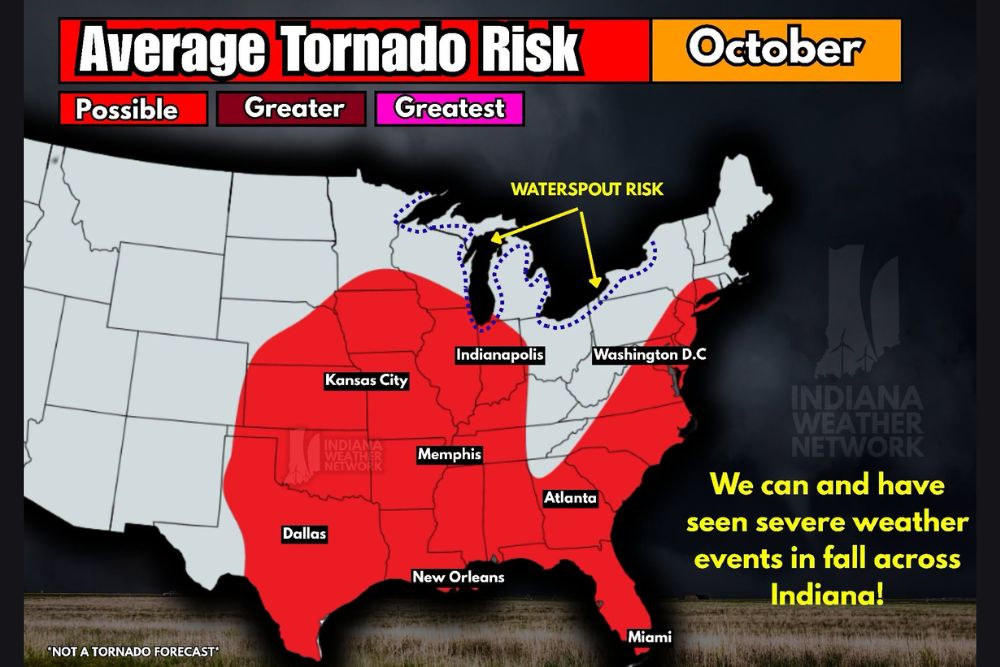
INDIANAPOLIS, IN — The peak of severe weather season may be over, but October is still no time to let your guard down. A look at the average tornado risk for October shows tornadoes remain possible across a large part of the central and eastern United States, including Indiana. The risk area runs from Texas and Oklahoma through the Mississippi Valley, the Ohio Valley and the Southeast, and up the Atlantic Coast toward Washington, D.C. Some of Indiana’s strongest tornadoes have happened during the fall and early winter months, which is a reminder that severe weather can strike well after spring and summer.
Where Tornadoes Are Possible in October
The October climatology map highlights a broad zone where tornadoes are possible during the month. In the Southern Plains, it covers most of Texas, including Dallas, along with Oklahoma and eastern Kansas, including the Kansas City area. It stretches across Missouri, Arkansas, Iowa and Illinois, then east into Indiana, including Indianapolis.
Farther south and east, the risk area covers Louisiana, including New Orleans, plus Mississippi, Tennessee, including Memphis, Kentucky, Alabama and Georgia, including Atlanta. It runs down the Florida Peninsula to Miami and up through the Carolinas, Virginia and Maryland toward Washington, D.C.
Why Tornadoes Still Happen in the Fall
Severe weather in fall often comes from strong cold fronts and powerful low-pressure systems as the jet stream strengthens and dips south with the change of season. When warm, humid air from the Gulf still lingers ahead of those systems, the contrast in temperature and wind can create enough instability and wind shear to support rotating storms.
Fall tornadoes usually occur less often than spring tornadoes, but they can still be dangerous. Many fall severe weather events are fast-moving and driven by strong wind fields. That can lead to quick, hard-to-see tornadoes, sometimes after dark, when people are less alert.
Indiana’s History With Fall Severe Weather
Indiana is a clear example that the fall severe weather season deserves respect. While not common, some of the state’s strongest tornadoes have happened during the fall and early winter months. Residents across central and southern Indiana, along with the Ohio Valley, should remember that a warm, windy day ahead of a strong cold front in October or November can bring a real severe weather risk.
Families, schools and businesses across Indiana should keep severe weather plans current through the fall and not wait for spring to review them.
Waterspout Risk Across the Great Lakes
Along with the inland tornado risk, the October map highlights a waterspout risk over the Great Lakes. That includes parts of Lake Michigan, Lake Superior, Lake Huron and Lake Erie. Waterspouts are more common in early fall, when cold air moves over the still-warm lake waters and creates enough instability for rotating columns of air to form over the water.
Boaters, anglers and anyone near the Great Lakes shoreline in Michigan, Wisconsin, Ohio and nearby states should watch the sky. They should also keep an eye on marine forecasts during cool, unsettled patterns this month.
Areas With Lower October Tornado Risk
The map shows a much lower tornado risk across the western United States, the northern Plains and the Upper Midwest, including the Dakotas, Minnesota and Wisconsin. Much of the Northeast and New England, including New York and Pennsylvania, also falls outside the main October risk zone. That’s mostly because cooler, more stable air takes over those regions as autumn sets in.
A Reminder, Not a Forecast
It’s important to understand that this map shows average October tornado risk based on climatology. It is not a tornado forecast for any specific day or storm. Actual severe weather depends on how individual weather systems develop. Some Octobers are quiet, while others bring significant outbreaks.
Residents across Indiana, Texas, Oklahoma and the Southeast should keep a reliable way to get alerts, including a NOAA Weather Radio and Wireless Emergency Alerts on their phones. Know where your safest shelter is, whether that’s a basement or an interior room on the lowest floor, and stay alert whenever strong fall storm systems are in the forecast.
For continuing coverage of fall severe weather and weather developments across the United States, visit diamondprowl.com.