NEW YORK, NY — In the days after Sept. 11, New Yorkers faced fear, shock and a future that suddenly felt uncertain. The attacks killed thousands, destroyed the World Trade Center and raised immediate questions about whether large cities, especially those built around tall buildings, could safely move forward.
Yet the same period also revealed a powerful civic instinct. Volunteers, neighbors, workers and first responders pushed quickly into recovery mode, helping one another in ways that many people still describe as defining New York’s character. That mix of grief and generosity remains part of how the city remembers 9/11.
September 11 left New York with fear that reached far beyond Lower Manhattan
In the immediate aftermath, the city’s mood was raw and unsettled. Many people wondered whether another attack might follow and whether dense urban centers with skyscrapers had become dangerously vulnerable. The scale of the human loss and the physical destruction made even routine life feel altered.
Longtime city leaders and residents also understood that the consequences would extend well past one terrible morning. The attacks changed how people thought about safety, transportation, business districts and public gathering places. For months, and in some cases years, the question was not only how to rebuild structures, but how to restore confidence in the city itself.
One of the lasting lessons was that fear alone could not define the response. New Yorkers still had to work, travel and care for one another, even while carrying a sense of vulnerability that had not existed before. That tension shaped the recovery from the first days onward.
Posters, public art and baseball helped restore a sense of normal life
Just days after the attacks, signs of collective resilience began appearing around town. Posters started going up in neighborhoods, and one project from students at the School of Visual Arts became part of that early visual response. The city’s famous “I Heart NY” logo was adapted to include the words “more than ever,” reinforcing a message of attachment rather than retreat.
A black spot over the heart symbolized the heartbreak felt by thousands of New Yorkers who had lost friends, relatives or colleagues. The message was simple, but it mattered: the city still wanted to be seen, understood and loved. In a moment when even optimism could feel fragile, that kind of public expression offered comfort.
Sports also played a part. The Mets and the Yankees each visited Ground Zero in the days after the attacks, showing support for the city and its workers. For many residents, those gestures helped signal that ordinary New York life, while deeply changed, would not disappear.
Ground Zero became a place for aid, remembrance and citywide coordination
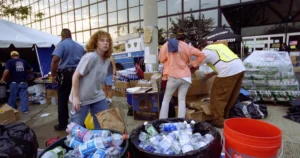
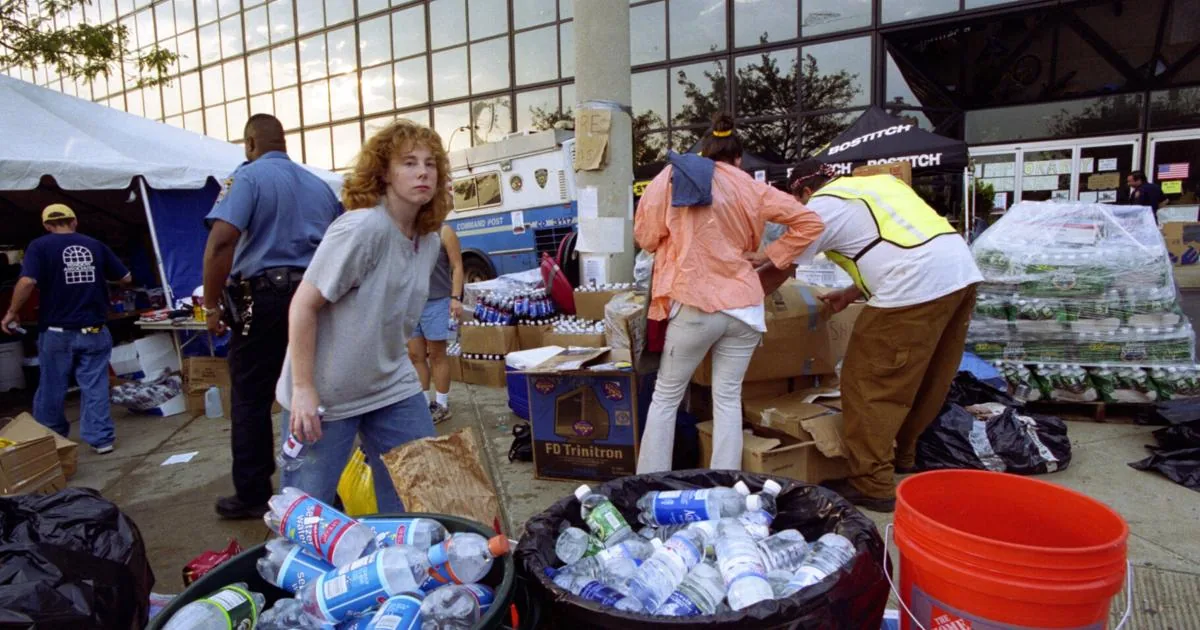
The area around Ground Zero quickly turned into a hub for assistance. Community members organized meetings, and volunteers loaded trucks outside the Salvation Army with donated supplies for first responders and families touched by the attacks. The need was immense, and people from across the region pitched in however they could.
Blood banks in New York and across the country saw urgent demand, with drives producing more donations than they could initially handle. Radio and television stations struggled to stay on the air in the days after the attacks, and many essential systems were damaged or overwhelmed. Even so, the city slowly found ways to coordinate help and information.
City leaders and community groups also began thinking about how neighborhoods would function long after the smoke cleared. The recovery effort required more than debris removal. It demanded plans for housing, local businesses, transit access and the daily routines that make a city feel livable again.
Business districts outside Lower Manhattan faced a long, uneven return
The loss was not confined to the World Trade Center site. Many businesses and residents in neighborhoods south of Canal Street faced power outages, closed stores and disrupted routines for days, while lingering dust and uncertainty made it hard to resume work. Some people could reach their homes only after navigating tightly controlled access zones.
City Council Speaker Julie Menin, whose restaurant, Fine, was in the Financial District, said the area was effectively closed. She later helped launch Wall Street Rising, a nonprofit aimed at strengthening and rebuilding small businesses downtown. The effort reflected a broader recognition that recovery had to include the local commercial base.
Menin’s group organized arts events, concerts and discounts for downtown businesses to help attract people back. Those programs were part of a larger message: rebuilding New York meant supporting the small firms and local institutions that give neighborhoods their identity and make them economically resilient.
A generation later, memories of loss are matched by pride in what the city rebuilt
For many New Yorkers, the memories remain vivid. Former residents and longtime city workers recalled smoke, confusion and the fear that their home might never feel the same again. Some described the sights and sounds of that period as impossible to forget, especially the images of families searching for loved ones and waiting for news.
At the same time, many people say the response showed New York at its best. Residents who lived through the days after the attacks remember help arriving from all directions, along with a determination to keep neighborhoods functioning and to support one another through the worst of it.
That spirit is part of the city’s legacy, even with all its complications. The loss was enormous, but so was the evidence of care. For people who witnessed the aftermath, the memory of generosity remains one of the clearest reasons the city endured and why the day still carries such deep meaning.