


LANSING, MI — Across Michigan, where the Great Lakes shape both travel and taste, a handful of family-run fish shacks and fisheries have stayed busy for generations. In small towns from the Thumb to the Upper Peninsula, they continue serving smoked whitefish, perch dinners and other simple lake-caught favorites that locals have long considered part of everyday life.
These places are more than casual lunch stops. Many still function as working fisheries, meaning the fish on the counter often comes from the same waters that define the surrounding communities. For travelers, they offer a direct connection to Michigan’s shoreline traditions, whether the stop is a harbor market, a roadside smoker or a preserved fishing village.
Bay Port and Charlevoix keep working fishing traditions in reach
Bay Port Fish Company in Bay Port stands out for its deep roots in Saginaw Bay’s commercial fishing history. Bay Port was once described as one of the largest freshwater fishing ports in the world, and the company still sells fresh and smoked fish such as whitefish and perch pulled from the Great Lakes.
Because it operates as both a commercial fishery and a retail market, customers are buying from a place that remains part of the local fishing economy. Smoked whitefish is one of the signature items, and the town’s summer fish sandwich festival adds another layer to its lake identity.
In Charlevoix, John Cross Fisheries plays a similar role. The family business has been part of the community for generations and is known for smoked fish, especially whitefish and trout. Hours can vary with the season, but the shop remains one of the town’s most direct links to its fishing past.
Fishtown in Leland keeps a historic shoreline atmosphere intact
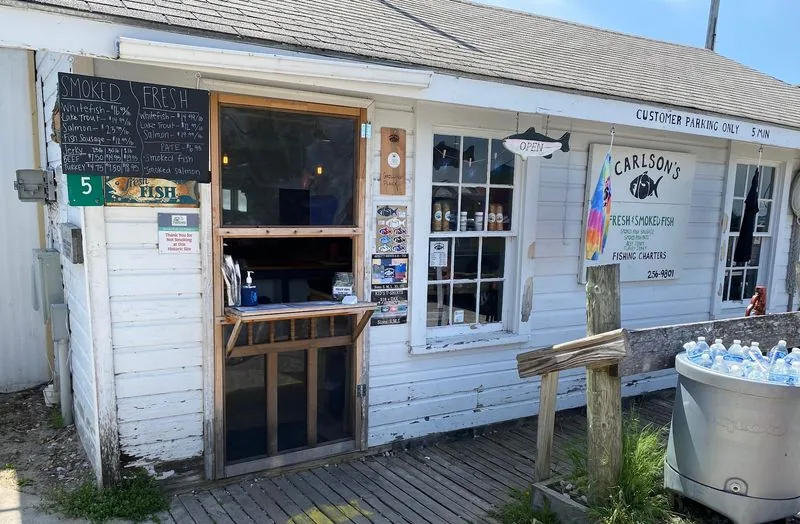
Few settings in Michigan feel as closely tied to the state’s fishing story as Leland’s Fishtown. The preserved cluster of shanties along the Leland River remains a working district, and Carlson’s Fishery is one of its cornerstone businesses.
The Carlson family has fished these waters for generations, and the shop sells fresh, smoked and prepared fish. Smoked whitefish and smoked fish dip are among the best-known items, drawing visitors who want a taste of the region in one of its most recognizable waterfront settings.
The appeal in Leland is not only the food but the atmosphere. Shopping there means moving through a place that still looks and feels connected to an older era of commercial fishing. In summer, parking can be tight, so an early arrival is often the easiest way to make the most of the visit.
Roadside stops on US-2 and the ferry route serve travelers well
Gustafson’s Smoked Fish in Brevort has become a familiar stop for drivers crossing the Upper Peninsula on US-2. The roadside shop specializes in smoked fish such as whitefish and trout, along with jerky and other snack items that travel well on long drives.
That convenience matters in this part of Michigan, where food stops can be spread far apart and the road trip itself is often part of the experience. For visitors heading toward Lake Michigan beaches or moving west across the UP, the shop offers an easy pull-over with a strong local payoff.
Ludington adds a different kind of harbor stop. The town’s charter-boat and ferry activity supports a steady appetite for fresh and fried fish, especially perch and whitefish. A fried perch dinner remains one of the region’s classic ways to enjoy the catch, especially during the warmer months when visitors are moving through town.
Mackinaw City and the Straits area tie fish markets to famous scenery
Bell’s Fishery in Mackinaw City sits near one of Michigan’s most recognizable landscapes, where Lakes Michigan and Huron meet. The family fishing business has served the area for decades and continues to sell fresh and smoked fish, with whitefish among the local favorites.
Because the location is close to the Mackinac Bridge and ferry docks, the setting is as much a part of the experience as the food. Nearby fried fish dinners also turn the day’s catch into a fuller meal for visitors exploring the Straits or waiting to board a boat.
Summer crowds can make the area busy, but the combination of working fishery and famous views gives Mackinaw City a strong place in Michigan’s fishing-map tradition. It is a reminder that the state’s lake culture is still visible in everyday commerce, not only in museums or festivals.
The far north from Hancock to Naubinway still depends on Great Lakes catch
In the Keweenaw Peninsula, the Hancock and Houghton area remains tied to Lake Superior’s cold, deep waters and the commercial fishing culture built around them. Whitefish and trout are especially associated with the region, and smoked versions continue to be staples in local diets.
That same sense of place carries down to Massey Fish Company in Naubinway, a small Upper Peninsula town on the northern edge of Lake Michigan. The working fishery sells fresh and smoked Great Lakes fish, with whitefish leading the way, and connects buyers directly to the lake and the boats that work it.
What links these northern stops is their sense of authenticity. They are not trying to imitate a shore tradition; they are part of it. For travelers willing to go beyond Michigan’s busier tourist corridors, the payoff is food that reflects the waters and communities that have supported these businesses for generations.