

NASHVILLE, TN — The American road trip still carries a powerful hold on the national imagination. It evokes long drives in oversized cars, roadside stops, and the promise that the trip itself can be as memorable as the destination.
That appeal has survived even as many travelers choose planes or faster interstate routes instead. The modern version of the road trip is more convenient than ever, but it often skips the small towns, odd attractions, and chance encounters that once defined the experience.
Historians and travel writers say that tradeoff is part of what makes the road-trip story so enduring. It is not only about movement across a map, but about how Americans have traveled, vacationed, and seen one another over time.
How postwar families turned the highway into a vacation tradition
After World War II, family road trips entered what many historians describe as a golden age. Rising middle-class incomes, more paid vacation time, growing car ownership, and federal highway investment all made long-distance driving easier for large numbers of Americans.
Susan Rugh, author of Are We There Yet? The Golden Age of American Family Vacations, argues that the period between the war and the oil crisis of the 1970s marked the high point of the family road trip. In that era, families could more realistically load up the car and head across the country.
Many veterans wanted to share the country they had helped defend with their children. Popular destinations included Washington, D.C., historic battlefields, and the national parks of the West. Those trips were often framed as both recreation and a lesson in citizenship.
National parks, monuments, and the idea of seeing America together
The road trip was not only a private family outing. It was also tied to larger ideas about democracy, public land, and shared national identity.
Rugh notes that national parks became major magnets for travelers after the war. Attendance rose by more than 650% between 1946 and 1966, helped by more than a billion dollars in federal spending to improve park facilities.
Families visiting these places were also taking part in a cultural story about the United States itself. Traveling together to famous landscapes and historic sites gave parents a way to pass along a sense of national belonging while still enjoying the pleasures of the open road.
The open road was not equally open for Black travelers
For Black families, the road trip often came with anxiety rather than freedom. Segregated facilities and discriminatory treatment were common well beyond the South, making something as ordinary as finding gas or a motel much more complicated.
Allen Pietrobon, a Trinity University professor who teaches about road trips, says the experience for Black travelers was fundamentally different. A stop along the highway could mean being denied service, even when money was ready to pay.
Because discrimination was so widespread, guidebooks such as the Green Book became essential. They listed places where Black travelers could safely eat, sleep, and refuel. Rugh also writes that stories of these struggles helped persuade lawmakers during debate over the Civil Rights Act of 1964.
Route 66 and the businesses that rose beside the highway
The growth of car travel created a new economy along America’s roads. Drivers needed places to eat, sleep, buy fuel, and linger at attractions, and entrepreneurs rushed to meet that demand.
Some businesses competed with unusual architecture and spectacle. Wigwam Village offered motel rooms shaped like giant concrete teepees, while other roadside stops advertised themselves with oversized versions of familiar objects such as nutcrackers.
Route 66 became one of the best-known examples. Commissioned in 1926 and fully paved by the late 1930s, the Chicago-to-Los Angeles highway was promoted as the “Main Street of America” and later celebrated in Bobby Troupe’s “(Get Your Kicks on) Route 66.”
Interstates changed the journey, not just the scenery
The arrival of the interstate system transformed highway travel by diverting traffic away from older roads and the towns along them. That shift made long drives faster and more efficient, but it also weakened the local businesses that had depended on passing motorists.
Many small motels, diners, and attractions closed as travelers began bypassing the main streets of towns. Some entire communities were left behind when the new roads pulled cars away from the old routes.
Even so, the old highways have not disappeared from memory or from the map. Preservation efforts continue, and travelers still seek out neon signs, Western-themed stops, and the slower pace of the roads that once carried most of America’s vacation traffic.
Why friction, detours, and delays can make trips more memorable
Travel writer Richard Ratay, who calls himself the King of the Road Trip, argues that the bumps along the way are often what people remember most. His book opens with a childhood car trip that went badly wrong when the family vehicle slid off an icy road and onto an embankment.
What sounds like a miserable ordeal became part of a cherished family story. Ratay says that the inconvenience, waiting, and uncertainty sometimes add to the meaning of a trip rather than taking away from it.
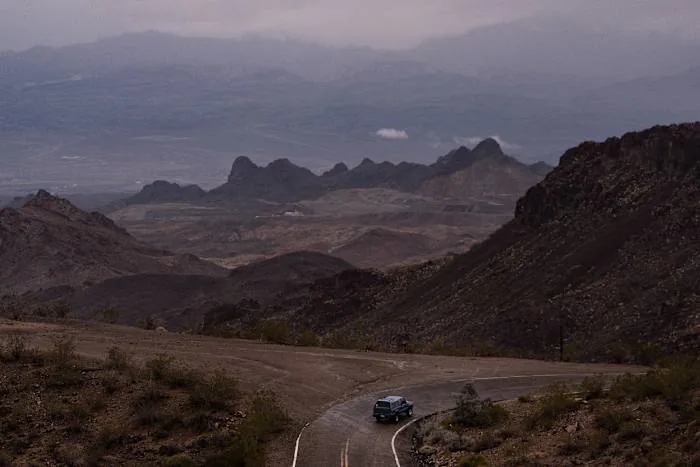
Pietrobon echoes that idea with an example of travelers stranded after a car accident in rural Nevada. With rental cars unavailable and little open nearby, they were forced to stay put, and the detour turned into a surprisingly rich experience.
That, he says, is what modern travel often tries to remove. Air travel and interstate driving promise speed and comfort, but they can also erase the encounters and discoveries that once made the journey itself worth taking.