

NEW YORK, NY — Andrew Cote’s workday often begins far above the street, where he checks hives on rooftops and skyscrapers across New York City. The beekeeper maintains 42 urban hives in all five boroughs, including one of his best-known sites at the InterContinental in Times Square.
At that location alone, about 120,000 bees live on the rooftop. During routine visits, Cote looks for signs that the colonies are healthy, that the queen is laying eggs, and that the hives are producing honey as expected. For him, the job is part fieldwork, part inspection, and part lifelong family craft.
How rooftop hive checks keep the colonies healthy
Cote described his rooftop visits as regular maintenance rather than a dramatic rescue mission. He checks the condition of the hives, watches for disease, and makes sure there is enough honey production to keep the operation moving.
He said a healthy queen can lay about 2,000 eggs a day, and that pace is part of what keeps the colonies strong. On an average day, his work can last through all available daylight, with stops at hives spread across the city.
The honey is harvested from frames in smaller boxes called honey mediums. Cote and his team remove those frames, use a centrifuge to spin out the honey, and then collect the finished product for sale.
A fifth-generation family business rooted in the 1800s
Beekeeping is not a new venture for Cote’s family. He said he is a fifth-generation beekeeper, and the family’s involvement with bees goes back to the 1800s.
Cote said his ancestors kept bees because they needed them to pollinate cherry trees. The family also had cherries and a cow, creating what he jokingly described as a small “land of milk and honey” with cherries on top.
He started working with bees at around age 10, originally to spend more time with his father. He admitted he was not especially interested in bees at first, but the hands-on experience eventually turned into a lifelong profession.
From family sideline to Andrew's Honey in 2005
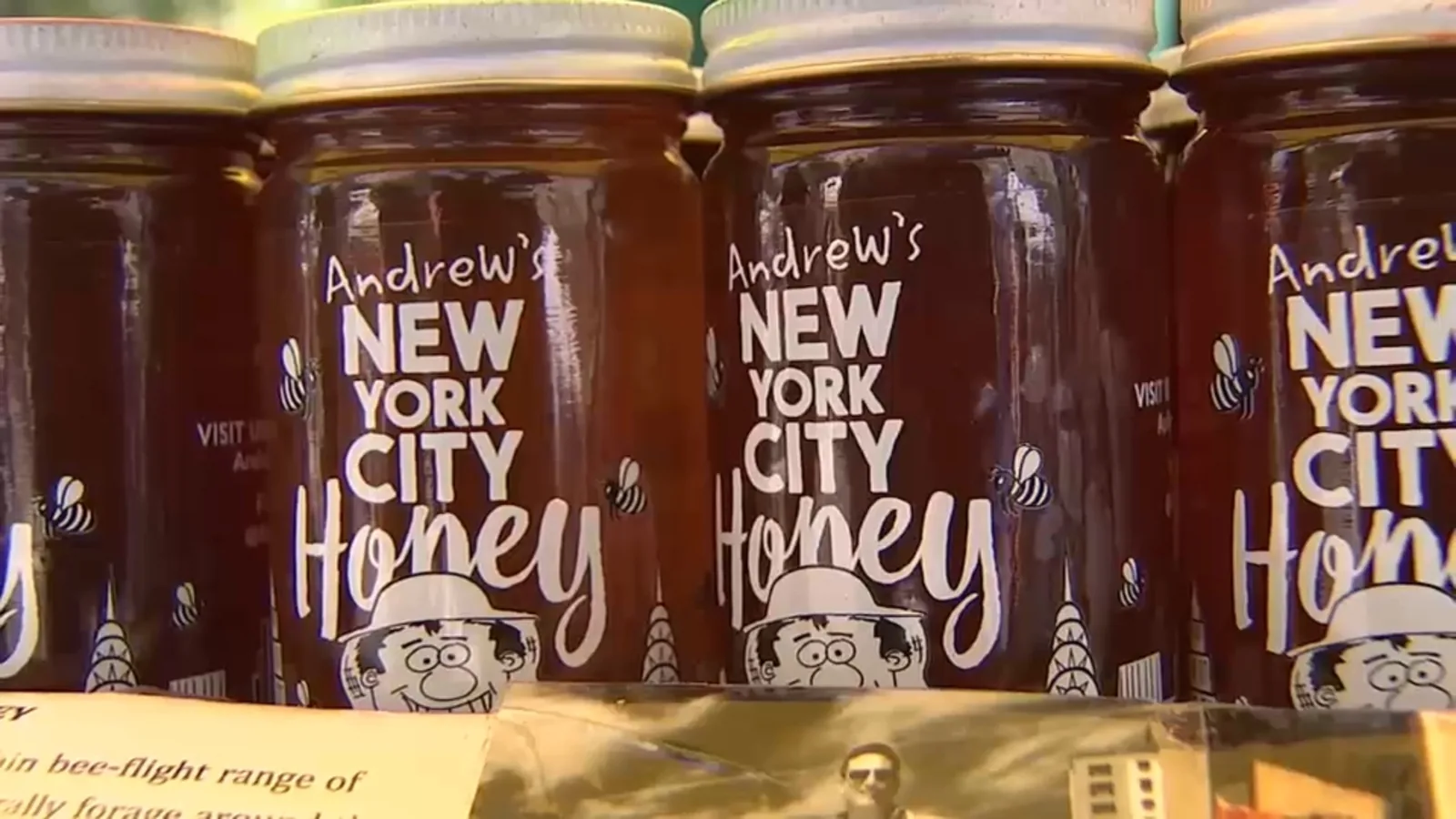
In 2005, Cote launched Andrew’s Honey with his father and brother. The business grew from a family sideline into a citywide operation with hives spread through all five boroughs.
One of the company’s regular locations is the rooftop of the InterContinental in Times Square, but the work stretches far beyond Midtown. Cote said he has bees on top of hotels, churches, synagogues, and even a major search engine company he declined to name directly.
He estimated that a hive produces about 60 pounds of excess, harvestable honey on average. By that measure, the two hives at the InterContinental housing roughly 120,000 bees would together yield about 120 pounds.
A truck, a market booth and a new storefront on Columbus Avenue
Beyond the rooftops, Andrew’s Honey has become a visible neighborhood business. Cote operates a truck that has become a familiar sight on the Upper West Side, along with a booth at the Union Square farmers market.
He has also recently opened the company’s first brick-and-mortar store at 75th Street and Columbus Avenue. That new storefront gives the business a more permanent home while keeping its roots in the city’s street-level life.
Cote said running a small business in New York comes with familiar struggles, especially high rent and a retail climate that he does not see as especially strong. Even so, he keeps the tone light, saying the rewards of beekeeping are “stings and poverty” — but also work he genuinely enjoys.
Why Rockaway Beach honey stands out to him
Among all the honey he produces, Cote said one of his favorites comes from Rockaway Beach. He pointed to the area near Jamaica Bay as having something “unspoiled” growing there, though he said he cannot identify exactly what makes that honey taste different to him.
For Cote, the appeal of the job is not only in the product, but in the setting. He said he likes working outdoors with “multi-billion dollar views,” while still feeling connected to his family lineage and to the natural world.
That sense of connection is part of what keeps the work meaningful, even as the business grows. The honey may be sold in New York, but the idea behind it is much older and more personal.
Passing the craft to the next generation
The family thread remains important in Cote’s life and business. His father, who is turning 84 this year, still works with him and also brings a long history of service as a firefighter of more than 30 years.
Cote is now introducing his own son to beekeeping as well. He does not expect his son to turn it into a career, but he hopes the child learns the discipline of the work and develops an appreciation for nature.
For Cote, the bees offer more than income or honey. He said their “organized chaos” calms him, and working with them leaves him feeling better when he steps back from the hive and returns to the rest of the city.