


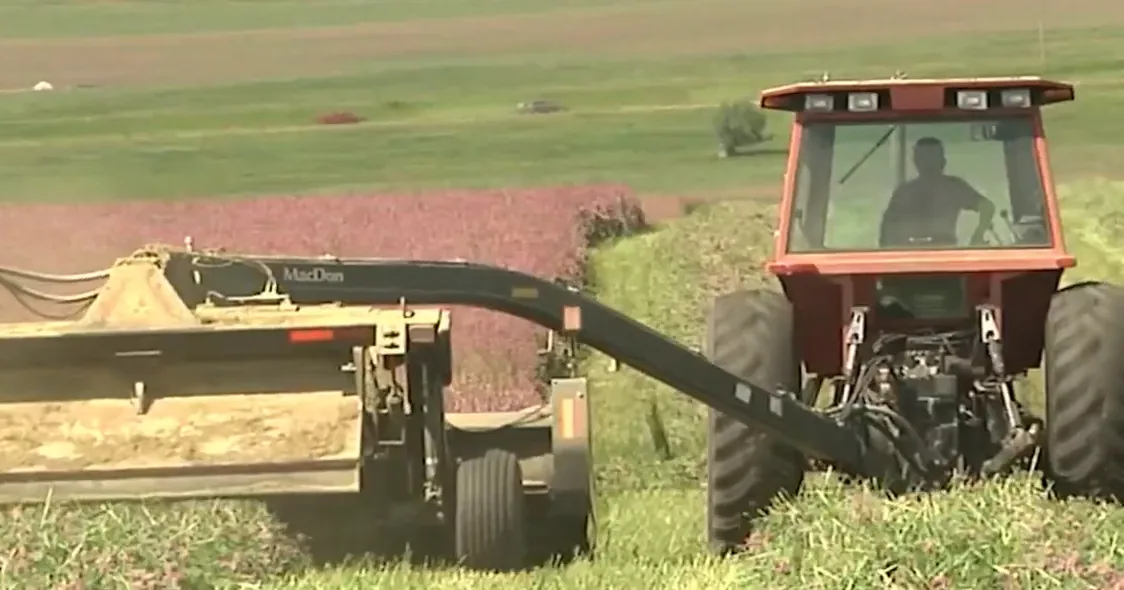
LANSING, MI — Michigan has already logged 114 crashes involving farm equipment this year, according to Michigan State Police, and two of those collisions were fatal. The numbers come as the state enters a stretch when rural roads typically become busier with tractors, combines and other machinery moving between fields.
The timing matters because harvest activity is just beginning to pick up. Farm safety advocates say drivers may soon see more slow-moving equipment on county roads and two-lane highways, where closing speeds can become dangerous in a matter of seconds.
October is historically one of the busiest months for farm equipment crashes
Michigan State Police data shows that October has historically seen the second-highest number of crashes involving farm equipment. That pattern makes the coming weeks especially important for both motorists and farmers, as long days in the field often overlap with increasing traffic on rural roads.
In 2025, Michigan recorded 179 farm equipment crashes and three fatalities. With this year’s count already at 114 by late September, safety officials and farm advocates are watching closely to see whether the seasonal surge plays out again.
The concern is not limited to one part of the state. Wherever harvest work requires machines to travel roads between properties, the risk rises when drivers do not expect equipment moving much slower than normal traffic.
Harvest work is only beginning after a slow start to the season
Michigan Farm Bureau says this year’s harvest has started slowly, which may have kept some motorists from seeing much equipment on the roads so far. That could change quickly in the weeks ahead as farmers work to bring in crops before weather and field conditions become less favorable.
Justin Tomei, associate legislative counsel for Michigan Farm Bureau, said farmers will be hard at work in the coming weeks even if activity has been limited up to now. He said the lull should not give drivers a false sense of security about what they may encounter on rural routes.
As of Sept. 27, just 1% of Michigan’s corn and 10% of the state’s soybeans had been harvested, according to the U.S. Department of Agriculture. That means a large share of the work remains ahead, along with the traffic that often comes with it.
Why slow-moving machinery creates danger on country roads
Farm equipment can be difficult to judge at a distance, especially for drivers traveling at highway speeds. Michigan Farm Bureau said a vehicle moving 55 mph needs about 300 feet of braking distance to avoid rear-ending farm equipment traveling 15 mph.
That gap helps explain why crashes can happen even when a driver notices a tractor or combine in time to react. If the road is narrow, visibility is limited or the machinery is turning, there may be little room to slow down safely.
Tomei said it is critical for both farmers and motorists to slow down and pay attention when traveling the countryside. The message is aimed at reducing the chance that everyday trips on rural roads turn into serious collisions.
Drivers are being urged to leave room and expect wide turns
Michigan Farm Bureau says motorists should be patient around farm machinery and make sure there is enough space before trying to pass. Drivers are also being reminded to stay alert for equipment that may move farther into the roadway to clear mailboxes, signs or other roadside obstacles.
Wide turns are another hazard that can surprise people unfamiliar with farm equipment. Large machines often need extra room to maneuver, and that can create confusion if a passing driver assumes the lane ahead is clear.
The recommendation is simple: slow down, watch closely and avoid rushing around machinery. Farm groups say a few extra seconds can make the difference between a normal commute and a deadly crash.
Farmers and motorists share responsibility during the busiest season
Michigan’s rural roads are a shared space during harvest, and both sides are being asked to do their part. Farmers need to operate with caution as they move between fields, while drivers need to remember that farm equipment is not moving at normal traffic speeds.
The warnings come as the state heads deeper into a period when equipment traffic typically increases. With more than a hundred crashes already reported and the harvest still unfolding, advocates say awareness remains one of the best defenses.
For older drivers and anyone who spends time on country roads, the advice is especially practical: keep distance, stay patient and give large machines the room they need. In a season built around urgency for farmers, safe travel depends on everyone slowing down.