



LANSING, MI — Michigan health officials are warning that misuse of nitrous oxide, a product with legitimate medical and culinary uses, is sending a growing number of people to the hospital. The state says recreational use of the gas has expanded in recent years and now poses a much larger public health concern than many people realize.
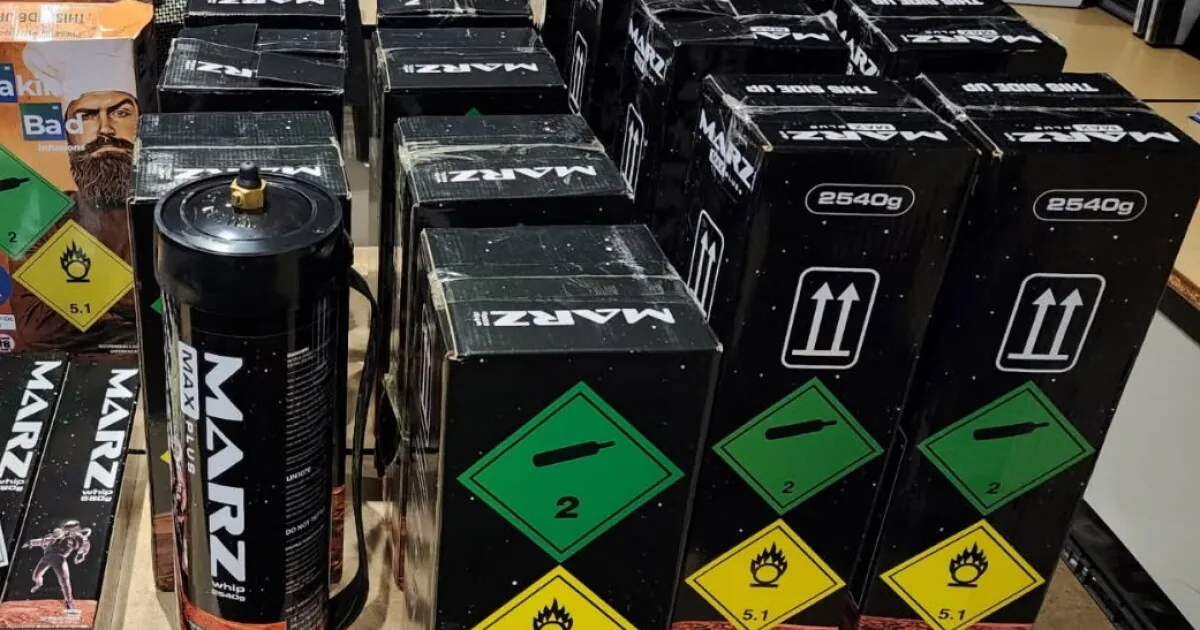
Nitrous oxide is sometimes sold for recreational use in grocery stores, smoke shops, vape stores, gas stations, convenience stores and online. State medical leaders say that easy availability can create the false impression that the product is harmless, even though it can quickly become dangerous without trained supervision.
Why state officials say nitrous oxide is becoming harder to ignore
The Michigan Department of Health and Human Services says the rise in recreational use has been driven in part by larger, high-volume canisters that are widely available. Those products have helped push nitrous oxide beyond occasional misuse and into a broader public health issue.
Dr. Natasha Bagdasarian, Michigan’s chief medical executive, said the way the product is sold can make the risks easy to overlook. She warned that items marketed as legal or low risk may still carry real danger when people use them outside a medical setting.
Officials say the concern is not limited to addiction or casual misuse. When nitrous oxide is used without trained supervision, the effects can become severe very quickly, including outcomes that may threaten a person’s life.
Hospitals are seeing more cases tied to the gas
The Michigan Poison and Drug Information Center says nitrous oxide-related health emergencies have climbed sharply in recent years. State health officials pointed to 112 cases identified between 2024 and May 2026, showing that the problem has grown enough to draw serious attention from public health leaders.
Those cases were not minor in many instances. According to the center’s figures, 34% of the people involved required hospital admission, and 7% were admitted to intensive care units.
MDHHS also said nearly half of reported cases led to medically significant outcomes. That includes symptoms such as numbness, tingling in the hands or feet, trouble walking, balance problems, confusion, anxiety and passing out.
Doctors say the medical gas can be risky when treated like a party product
Dr. Matt Dellaquila, president of the Michigan Society of Anesthesiologists, said he finds it troubling that nitrous oxide is being used recreationally when it is normally part of carefully monitored medical care. He noted that doctors use the gas in controlled settings to help provide safe, comfortable treatment, including for children and other vulnerable patients.
That contrast is part of why health experts are raising alarms. A substance that is useful in a hospital can become hazardous when used casually, in larger amounts or without medical monitoring.
Officials say that gap between medical use and recreational misuse may be one reason the public is underestimating the seriousness of the problem. The state’s warning aims to close that gap before more people are harmed.
Where the product is sold and why access matters
Michigan health officials say nitrous oxide is not hard to find. It is sold in everyday retail settings as well as online, which makes it accessible to people who may not think twice about buying it.
The state specifically cited grocery stores, smoke shops, vape stores, gas stations and convenience stores as places where the product may be available. Officials say that wide distribution helps normalize use and makes it easier for misuse to spread.
When a product appears alongside ordinary consumer goods, health leaders say people may assume it is safe. MDHHS argues that assumption can be misleading, especially for a gas that can cause serious symptoms when used recreationally.
What symptoms officials want people to watch for
State health officials say anyone who notices troubling symptoms after using nitrous oxide should stop immediately and get medical care. The warning is aimed at people who may not realize their symptoms are connected to the gas.
Among the problems identified by MDHHS are numbness, tingling, trouble walking, balance issues, confusion, anxiety and fainting. Officials say those signs can indicate medically significant harm and should not be ignored.
The state’s message is that early action matters. Because the gas can become dangerous quickly when used outside supervised care, officials want people to treat warning signs as a reason to seek help right away rather than wait for symptoms to pass.
Public health leaders hope the warning changes how people view laughing gas
MDHHS says recreational use of nitrous oxide, often called laughing gas or whippets, has grown over recent decades, but the current wave of concern is tied to its wider availability and stronger canisters. Health leaders say the trend has turned a familiar product into a real and growing safety issue.
The warning from state officials and anesthesiologists is meant to remind Michigan residents that legal sale does not equal low risk. Even products with ordinary uses can cause hospitalizations when they are taken out of their intended setting.
For health authorities, the hope is simple: fewer people using nitrous oxide recreationally, and more people recognizing the signs of harm before an emergency becomes more serious.