


NEW YORK, NY — Karl-Anthony Towns used World Mental Health Day to speak candidly about the grief that has followed him since his mother died of complications from COVID-19 six years ago. The New York Knicks star said the loss changed the way he viewed basketball and left him wondering whether he wanted to keep playing.
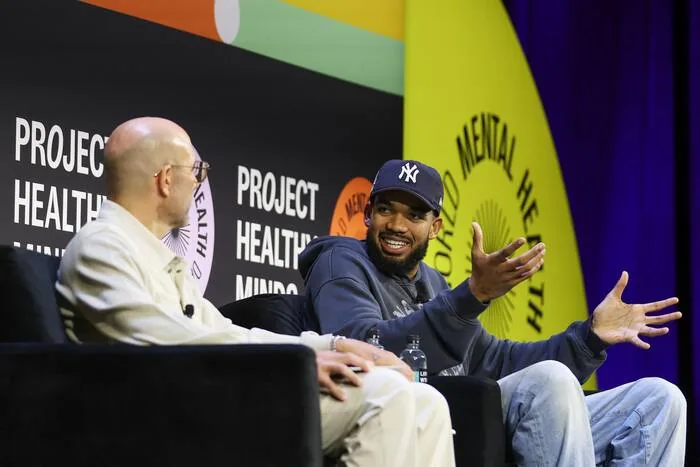
Speaking at a Project Healthy Minds event in New York, Towns described the title run with the Knicks as meaningful in part because it brought back a feeling of calm and purpose. He said basketball once felt empty after his mother’s death, but that support from people he trusted helped him reconnect with the game and with himself.
Towns says basketball once felt empty after his mother’s death
Towns said there was a period when the game he loved no longer gave him joy. He told the audience that after his mother died, basketball “felt hollow,” and he questioned whether he wanted to continue.
That emotional distance stood in sharp contrast to his later experience during the NBA Finals, when he felt a deep calm before the first game. Towns said the moment reminded him of the youth games he played as a child, when he could look into the stands and find his mother easily because the crowds were so small.
He said those memories helped him think of himself as an artist on the court, able to “paint” through his play for the person who first supported him. The reflection showed how closely his professional success remains tied to the personal loss he has carried.
Support from a trusted coach helped him start healing
Towns credited strength and wellness coach Arnie Kander with helping him through a painful stretch. He said being able to speak openly with someone he trusted made a real difference in how he processed his grief.
He described therapy and honest conversation as a way to unload pain instead of carrying it alone. With each conversation, he said, he felt lighter. That sense of relief, he explained, came from being heard and having his feelings understood and put into words more clearly.
His comments fit with the broader message of the day: that emotional recovery is often helped by practical support and regular, trusted conversation rather than silence or self-isolation.
Project Healthy Minds uses sports to reach people who may avoid therapy
The event was hosted by Project Healthy Minds, a tech nonprofit that runs a free online marketplace connecting people with therapy, psychiatry, support groups and other mental health services. The group also stages an annual World Mental Health Day festival in New York, with yoga, art therapy and speaker sessions.
Project Healthy Minds has increasingly leaned on public figures to broaden its message. Organizers hope Towns’ openness will encourage others to seek care or talk more openly about emotional struggles. The nonprofit sees sports as a particularly effective way to reach people who may not respond to traditional awareness campaigns.
Its leaders said the platform can help normalize the idea that asking for help is a sign of strength, not weakness. They also pointed to the wide reach of athletes and the emotional connection they have with fans across the country.
Other athletes joined the discussion on mental health and purpose
Boardroom CEO Rich Kleiman, who also sits on Project Healthy Minds’ board, joined Towns on stage. Kleiman said more athletes are willing to talk about mental health now than they were a few years ago, though he noted the locker room still is not always a place where those conversations happen easily.
He pointed to earlier public discussions by DeMar DeRozan and Kevin Love as moments that helped bring anxiety and depression into the sports conversation. According to Kleiman, those stories opened the door for more players to speak honestly about the pressure they carry.
Another panel brought together former NFL receiver Brandon Marshall and Gotham FC forward Midge Purce. Marshall spoke about therapy and his 2011 borderline personality disorder diagnosis, while Purce discussed how teammates helped her redefine toughness as something that includes sadness and resilience, not the absence of emotion.
The nonprofit plans to keep leaning on culture and sports
Project Healthy Minds leaders said the conversation around Towns is part of a larger strategy to use culture, entertainment and sports to reach different audiences. The nonprofit has already partnered with the Broadway production “Every Brilliant Thing,” a one-person show about a struggling mother and a list of reasons to live.
Chief executive Phil Schermer said athletes are especially useful messengers because they shape ideas about strength in American life. He said he wants more men who are viewed as strong to be willing to show vulnerability and talk honestly about emotions.
The organization also sees moments like the Knicks’ championship run as unusually powerful shared experiences. Schermer said that kind of public attention, along with live sports and in-person gatherings, can help people build community in ways that feel increasingly rare.
Fans and young people respond to shared sports moments
The discussion also touched on how big sports moments can create a sense of belonging, especially for younger people who spent part of their lives during the pandemic. Rachel Janfaza, founder of the Gen Z research firm The Up and Up, said the Knicks run and the World Cup gave young people a reason to gather in person.
She spoke with “The Anxious Generation” author Jonathan Haidt and TAG Movement CEO Alexa Arnold about the value of real-world social connection. Janfaza said schools, employers and others with influence over young people should recognize and support those moments of community.
For Towns, the appearance tied a championship season to something larger than basketball. His message was that grief can linger, healing can take help, and speaking openly about mental health can make both athletes and fans feel less alone.