
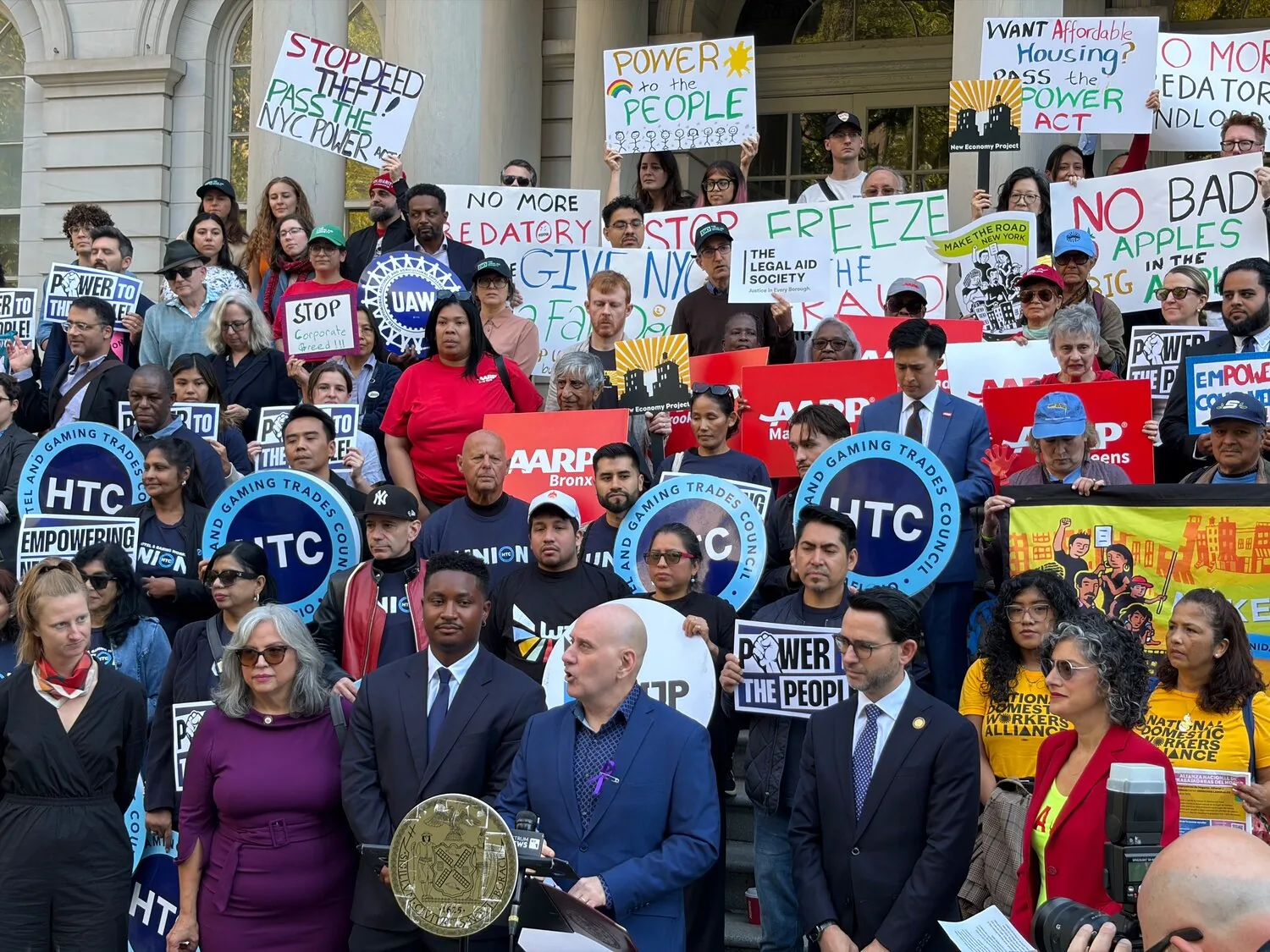
NEW YORK, NY — New York City workers, tenants, consumers and small-business owners are backing a new City Council bill that would expand the ways people can challenge unfair business practices. Supporters gathered outside City Hall on Thursday to push the POWER Act, short for the People and Organizations Winning Economic Relief Act.
The proposal is backed by Mayor Zohran Mamdani and sponsored by Council Member Harvey Epstein, who chairs the Committee on Consumer and Worker Protection. Backers say the measure would give people more direct power to hold companies accountable, instead of relying mainly on city agencies to bring cases.
Supporters say the bill is meant to close gaps in the city’s existing consumer-protection rules and create a quicker path to relief for people who say they have been harmed.
What the POWER Act would let New Yorkers challenge
The bill would expand the city’s consumer-protection framework to cover a wider range of conduct, including deed theft, junk fees, worker misclassification, predatory small-business financing, surveillance practices by technology companies and addictive features on social media platforms.
Under the proposal, tenant unions could sue landlords over deceptive trade practices. Taxi drivers could challenge financing terms that supporters describe as unconscionable. Consumers harmed by predatory pricing could also seek relief tied to related loans, according to the measure’s backers.
The bill would also allow nonprofits to bring claims on behalf of themselves, their members and the public. Supporters say that broader standing would make it easier to address harm that can affect whole neighborhoods, worker groups or business communities.
Backers say the law would not depend on City Hall priorities
Lorelei Salas, a senior fellow at the Century Foundation and Protect Borrowers and a former commissioner of the Department of Consumer and Worker Protection, said the biggest change would be giving people a private right of action. That, she said, would help workers and consumers avoid depending entirely on whatever administration is in charge at City Hall.
Salas said that matters as federal policy rolls back protections. She argued that city residents should not lose protection simply because enforcement priorities change from one administration to the next.
She also said modern pricing and sales tactics can be financially damaging even when they do not fit neatly into older definitions of deceptive conduct. Salas pointed to mortgage servicers that charge borrowers fees just to make mortgage payments as one example.
Why freelancers and gig workers see an opening
Supporters say the POWER Act could help workers outside traditional employment arrangements, including app-based drivers and independent contractors. Salas said Uber and DoorDash drivers, for example, are often treated as independent contractors and can function like small businesses under the law, leaving them without the same protections traditional employees may have.
Andrea Gordillo, president and executive director of the Freelancers Union, said the bill could also give independent workers more leverage when negotiating with much larger companies. She said artists, writers and other creative workers may face new pressures as artificial intelligence changes parts of their industries.
Gordillo said the legislation would begin to rebalance those relationships by giving workers a way to take action against abusive and unfair practices.
Small businesses say costly financing can trap owners in debt
Small-business advocates at the rally focused heavily on merchant cash advances, which they described as a fast but risky source of capital. Lindsey Vigoda, New York director of Small Business Majority, said owners of very small businesses often turn to those advances in a pinch and then end up stuck in expensive repayment schedules.
Vigoda said a $10,000 advance can lead to hundreds of dollars in daily payments. She compared the products to payday loans for businesses and said borrowers can have few options when repayment terms become abusive.
Because many of those borrowers are treated as commercial entities rather than consumers, supporters say they often have fewer tools to fight back. The POWER Act would let businesses bring claims under the city’s expanded consumer-protection system.
Council lawmakers are also moving two related pricing measures
The consumer-protection push is part of a broader set of proposals moving through the Council. Alongside the POWER Act, lawmakers are also advancing the Truth in Pricing Act, which would simplify city rules on how businesses display prices while keeping transparency requirements in place.
Another proposed amendment would remove a lengthy rulemaking step and allow the Department of Consumer and Worker Protection to act more quickly against unconscionable business practices. Supporters say faster enforcement could matter in cases where harmful conduct spreads before regulators can respond.
Salas said the goal is not only to bring lawsuits after harm has already happened, but also to change behavior before disputes reach court. In her view, the law should give companies a reason to stop practices that exploit workers, tenants and small businesses in the first place.