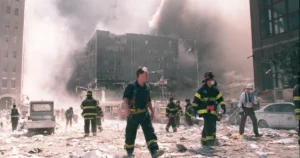

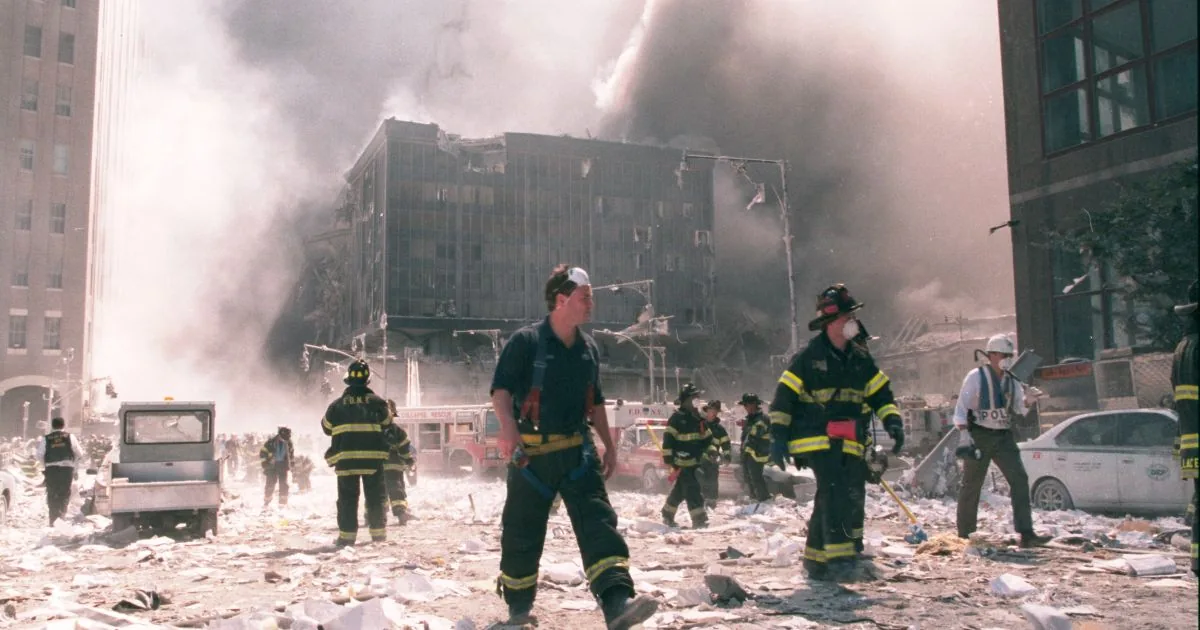
NEW YORK, NY — Newly released September 11 records show New York City officials were discussing toxic exposure, health risks and possible legal claims within weeks of the attacks, even as people were returning to Lower Manhattan.
Mayor Zohran Mamdani announced Tuesday that more than 170,000 pages tied to the attacks are now being made public ahead of the 25th anniversary. The release settles two lawsuits brought by 9/11 Health Watch after years of pressure to obtain the documents.
Among the materials is the long-sought Harding Memo, prepared in October 2001 for then-Deputy Mayor Robert Harding during the Giuliani administration.
Harding Memo estimated thousands of possible claims tied to exposure and cleanup
The Harding Memo is one of the most closely watched documents in the archive because it appears to capture early internal thinking about the city’s legal exposure. It estimated New York could face about 35,000 potential plaintiffs and as many as 10,000 claims connected to September 11.
Those claims could include allegations that residents were urged back to Lower Manhattan too quickly and later suffered health problems linked to toxic exposure. The memo also pointed to possible claims involving rescue workers who may not have had enough protective equipment during cleanup and recovery.
The document suggests that city officials were already weighing both public-health consequences and liability concerns while the area around Ground Zero was still in the earliest stages of reopening.
Public reassurances about air quality differed from internal concerns
While officials were tracking legal and health risks internally, city health leaders were telling the public something much more reassuring. In October 2001, the New York City Department of Health said particulate levels in Lower Manhattan did not pose long-term health risks to the general public.
The department repeated that position in February 2002, saying testing still did not indicate long-term health effects. Those statements are now part of a larger record that may help show how public messaging lined up, or did not line up, with internal assessments.
The newly opened files may offer a more complete view of how city agencies understood the fallout from the World Trade Center collapse as residents, workers and students returned downtown.
FOIL fight exposed missing boxes and led to a court ruling
The documents did not become public without a fight. 9/11 Health Watch filed a records request in 2023 seeking materials about what the Giuliani administration knew about toxic substances released by the collapse and when officials became aware of possible health risks.
The New York City Department of Environmental Protection first said a diligent search had turned up no responsive records. Then, in 2025, the agency said it had at least 68 boxes of 9/11-related material, containing an estimated 340,000 pages.
That discovery became central in court. On May 28, New York Supreme Court Justice James G. Clynes ruled for 9/11 Health Watch, saying the agency acted “arbitrarily and capriciously” when it denied the appeal of the records request.
Judge said the city’s search was vague and lacked individual review
Clynes’ ruling came through an Article 78 proceeding, the New York process used to review decisions by state and local agencies. In public-records disputes, a judge can examine whether an agency properly searched for requested documents and followed the Freedom of Information Law.
The judge found the Department of Environmental Protection’s explanation too vague and said it lacked individualized analysis. That finding helped push the city toward settling the case and moving ahead with public release.
Tuesday’s announcement also resolved a second lawsuit brought by 9/11 Health Watch. The city is now opening the files through a new public portal designed to make the archive easier to search and use.
Records may help people seeking health care or compensation
City officials said the archive includes material involving World Trade Center 7, contamination in Lower Manhattan and cleanup procedures after the attacks. One highlighted document concerns warnings raised by Rep. Jerrold Nadler about apartment conditions downtown and whether cleanup efforts adequately addressed asbestos and other contaminants.
The records may also be useful to people still trying to qualify for federal 9/11 health care or compensation. New York City plans to assign staff at the Department of Citywide Administrative Services and New York City Public Schools to help people locate records showing they were present in the New York City Exposure Zone.
Those documents could help some applicants prove eligibility for the World Trade Center Health Program or the September 11th Victim Compensation Fund, both of which serve people harmed by the attacks and their aftermath.
More documents are expected as the archive keeps growing
The city said it has already committed more than $34 million to building and maintaining the portal and related access efforts. Tuesday’s release is only part of the overall archive, not the end of the disclosure process.
The New York City Law Department is expected to keep reviewing records for the next 12 months. As files are processed and personally identifiable information is removed, additional documents will be made public.
Two and a half decades after September 11, the expanding archive could become one of the fullest public records yet of what city officials knew about toxic conditions around Ground Zero, when those concerns emerged and how the city responded as Lower Manhattan reopened.